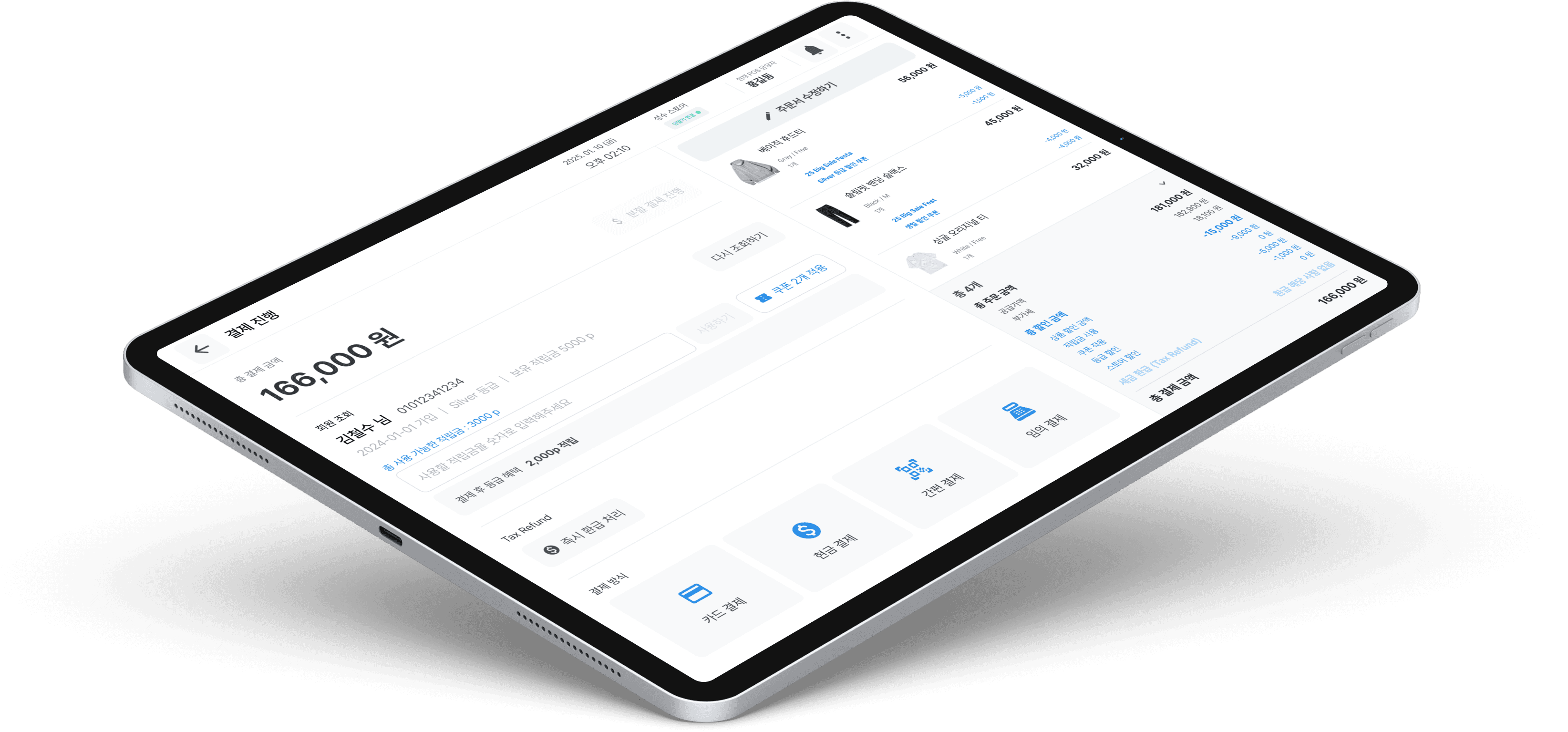
2.0 Renewal Project
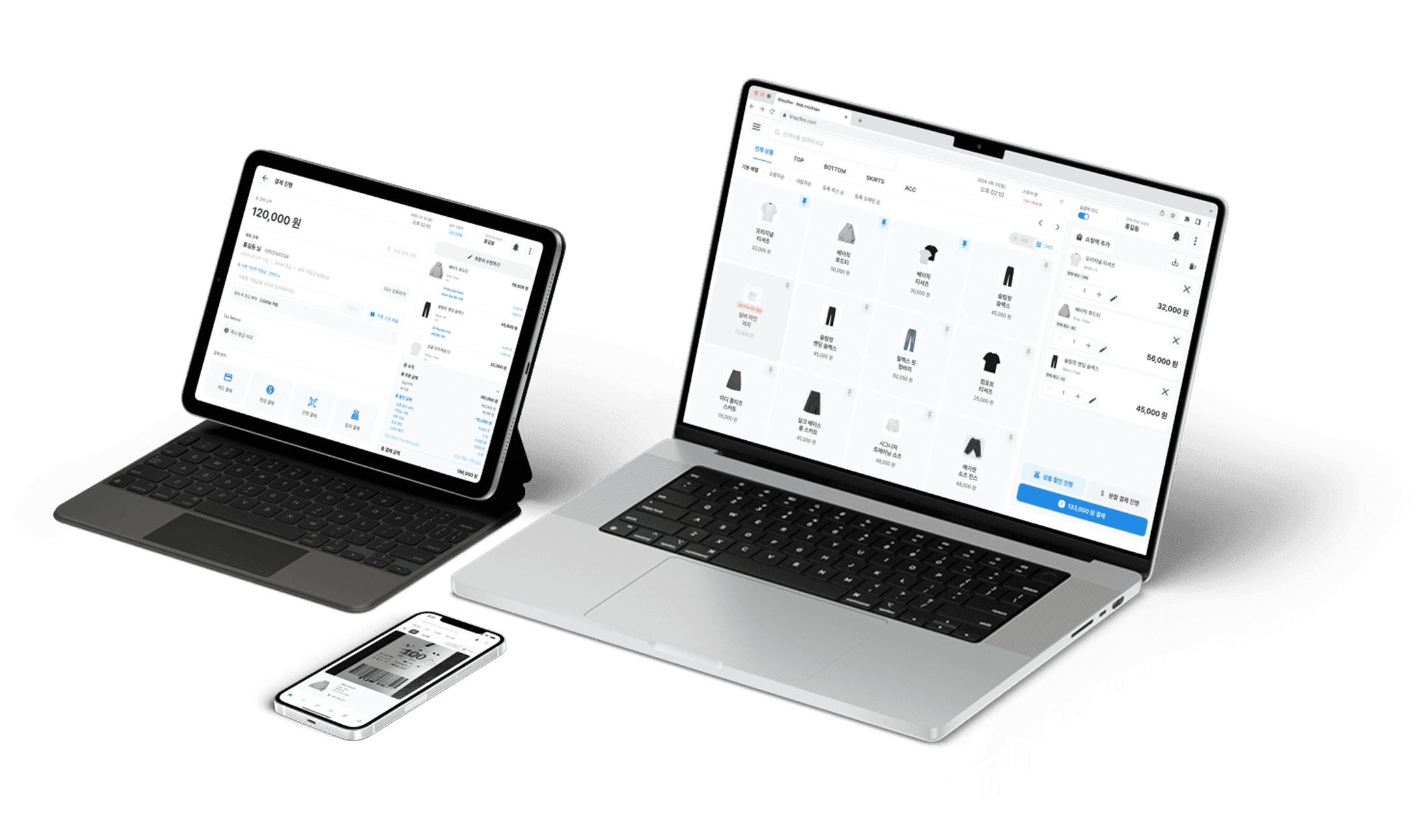
Led the structural renewal of aft to unify online and offline retail experiences through redesigned UX, data flow, and POS architecture.
2023.02 – 2023.12
🎯 Product Strategy
🗺️ Roadmap Management
⚖️ Decision Making
💼 Business Impact
Project
Overview
The “aft 2.0 Project” was a major renewal initiative designed to evolve aft from a store-based POS service into a brand-level omnichannel cloud platform. Centered around “aft Admin,” the goal was to unify online and offline data, enabling brands to manage sales, products, inventory, and membership in real time within a single system.
This was not just a UI update — it encompassed a database overhaul, service architecture redesign, UX/UI renewal, and MVP validation, representing a full-stack redesign of Aft’s entire service ecosystem.
Strategy Alignment
aft 2.0 marked the first step toward Aft’s long-term vision of becoming a brand-centric SaaS platform integrating online and offline data. The team transitioned from a single POS structure to a cloud-based brand-level architecture, allowing each brand to manage data seamlessly across stores, channels, and regions.
By addressing key pain points identified through extensive user interviews during the MVP stage, we refined the product into one that users were genuinely willing to pay for.
Stakeholders
Given the large scale and complexity of the renewal, the project was executed through a cross-functional collaboration structure:
Engineering (Back-end / Front-end): Cloud infrastructure design, micro-architecture development, UX/UI implementation support
Design Team: User journey redesign, UX/UI renewal
CX & Sales Team: Interview recruitment, user feedback analysis, and feature prioritization
Executive Team: Business model validation, pricing strategy, and launch planning
My Role
I led the entire project end-to-end — from planning and research to architecture design, UX/UI renewal, and roadmap execution.
Key responsibilities:
User Research: Planned and conducted interviews with existing and potential clients to extract common workflows
Persona & Pain Point Definition: Quantified key operational challenges faced by SMB fashion and retail brands
MVP Design & Validation: Designed and validated core features including inventory, store management, and payment integration
Architecture & Database Design: Developed a brand-level 1:N store integration model
Business Model Design: Defined pricing structures, service tiers, and monetization strategies for Aft’s SaaS model
UX Scenario & Storyboard Creation: Defined user flows and functional narratives based on research insights
Project Leadership: Managed cross-functional collaboration (Design, Engineering, CX) and led sprint execution
Problem
& Goals
Problem
Observation
SMB retail brands were struggling to manage inventory, product, and sales data across rapidly evolving channels.
Offline stores relied on manual processes or outdated, complex systems, while online operations were handled through separate e-commerce platforms — making real-time data synchronization between online and offline channels impossible.
Moreover, POS setup and migration required significant time and cost, creating high barriers to channel expansion.
Analysis
Through extensive user interviews (including existing and potential clients), we identified three major pain points
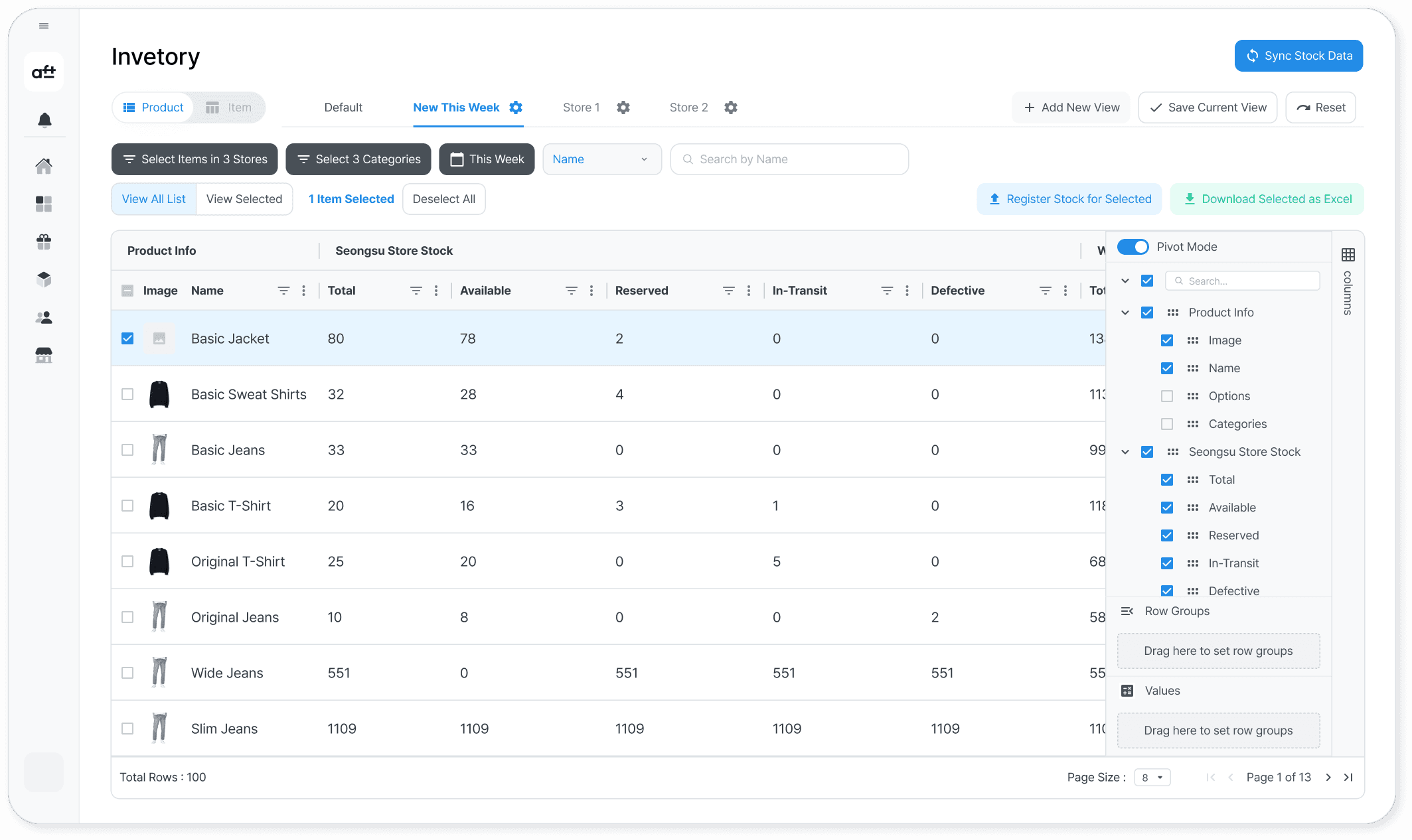
Difficulty in Real-Time Inventory Tracking
Separate online/offline systems made brand-level inventory management impossible
Manual and spreadsheet-based workflows led to frequent data errors
Lack of real-time visibility caused missed orders and poor customer experiences (increased CS volume)
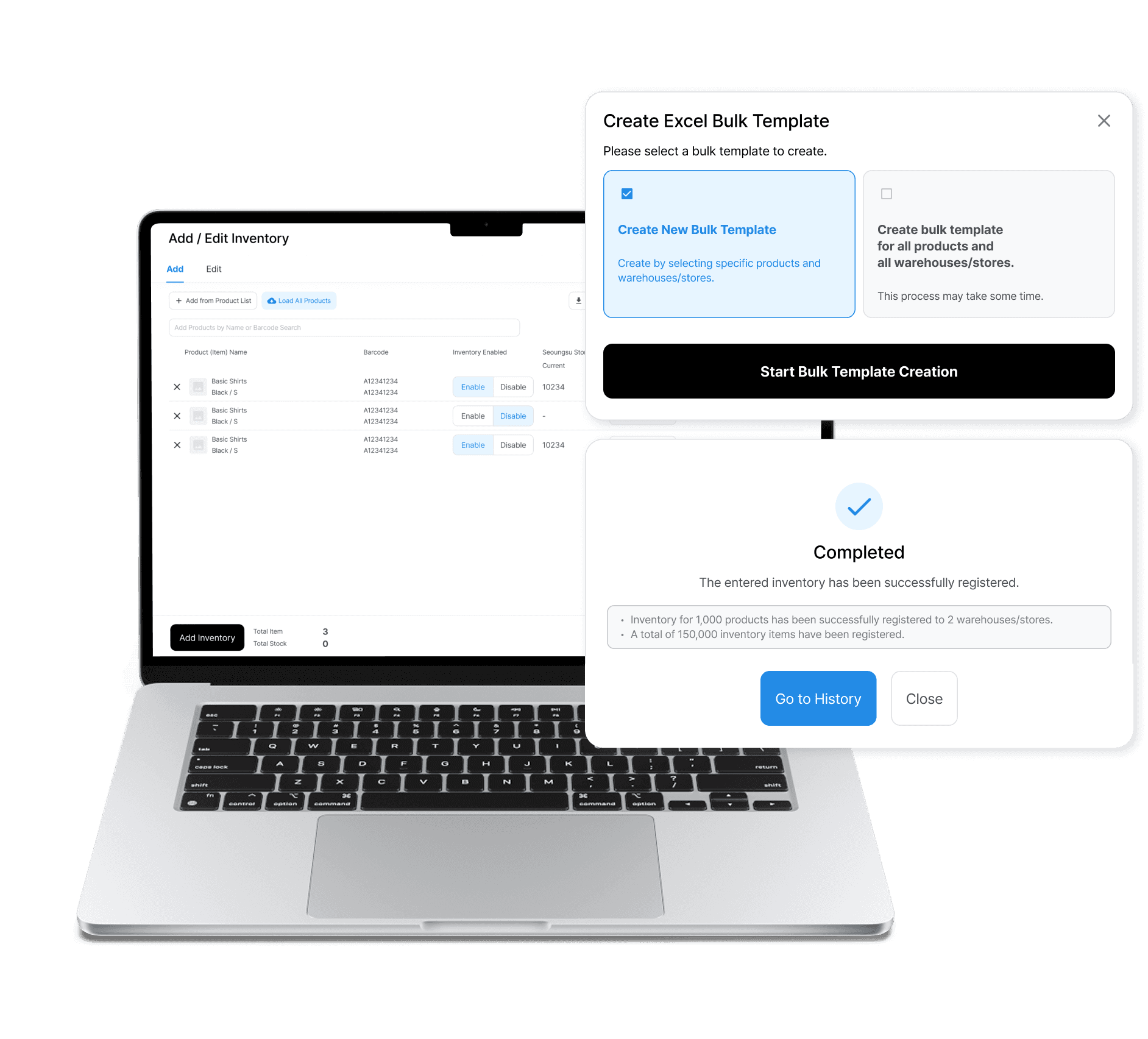
Complex Store Operations & POS Setup Burden
Different configurations by store type (flagship, department store, pop-up) required 7 days on average for setup
Repetitive reconfiguration and syncing required during POS migration
Payment System Complexity & PG Integration Friction
Cumbersome paperwork and external approvals required for PG application
Inability to support new payment methods such as digital wallets, global payments, and local currencies
Definition
We defined the problem as:
“SMB retail brands need to unify online and offline data management and operate on a scalable, low-complexity system that enables instant expansion.”
This was not about adding features — it was about redesigning the business infrastructure so that brands could enhance operational efficiency and adapt to the rapidly evolving retail ecosystem.
⚡️ The Challenge
The challenge was to enable SMB retail brands to achieve enterprise-level operational efficiency and scalability, even within fragmented environments — all while keeping the solution practical, accessible, and low-barrier to adopt.
Goal
The ultimate goal of aft 2.0 was to build a brand-centric SaaS platform that unifies all channels in one place.
We focused on three primary objectives:
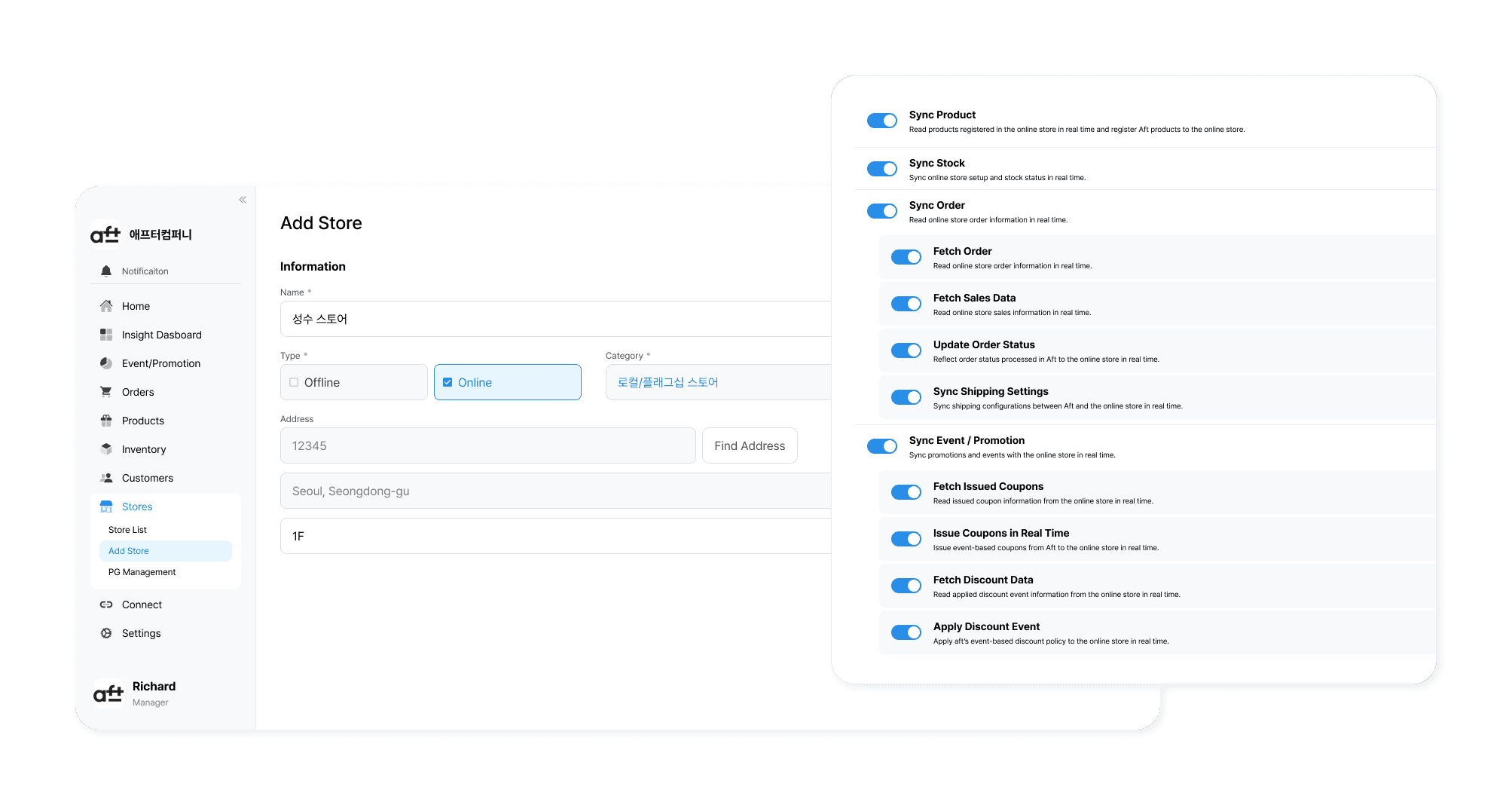
Real-Time Inventory & Order Integration : Establish a brand-level 1:N store linking architecture
Simplified POS Onboarding : Create an auto-setup process for instant store activation
Flexible Payment System : Support digital wallets, international, and regional payments within a single PG integration
Execustion
& Process
Design Process
Research
User interviews, data flow analysis
Common workflows
Pain point map
Define
Defining MVP scope and core functionality
MVP roadmap, feature prioritization
Design
Service architecture redesign, UX/UI overhaul, DB modeling
Architecture diagram, wireframes & storyboards
Deliver & Validate
Internal testing and closed beta evaluation
MVP iteration plan based on feedback
The “aft 2.0 Project” was a major renewal initiative designed to evolve aft from a store-based POS service into a brand-level omnichannel cloud platform. Centered around “aft Admin,” the goal was to unify online and offline data, enabling brands to manage sales, products, inventory, and membership in real time within a single system.
This was not just a UI update — it encompassed a database overhaul, service architecture redesign, UX/UI renewal, and MVP validation, representing a full-stack redesign of Aft’s entire service ecosystem.
Strategy Alignment
aft 2.0 marked the first step toward Aft’s long-term vision of becoming a brand-centric SaaS platform integrating online and offline data. The team transitioned from a single POS structure to a cloud-based brand-level architecture, allowing each brand to manage data seamlessly across stores, channels, and regions.
By addressing key pain points identified through extensive user interviews during the MVP stage, we refined the product into one that users were genuinely willing to pay for.
Stakeholders
Given the large scale and complexity of the renewal, the project was executed through a cross-functional collaboration structure:
Engineering (Back-end / Front-end): Cloud infrastructure design, micro-architecture development, UX/UI implementation support
Design Team: User journey redesign, UX/UI renewal
CX & Sales Team: Interview recruitment, user feedback analysis, and feature prioritization
Executive Team: Business model validation, pricing strategy, and launch planning
My Role
I led the entire project end-to-end — from planning and research to architecture design, UX/UI renewal, and roadmap execution.
Key responsibilities:
User Research: Planned and conducted interviews with existing and potential clients to extract common workflows
Persona & Pain Point Definition: Quantified key operational challenges faced by SMB fashion and retail brands
MVP Design & Validation: Designed and validated core features including inventory, store management, and payment integration
Architecture & Database Design: Developed a brand-level 1:N store integration model
Business Model Design: Defined pricing structures, service tiers, and monetization strategies for Aft’s SaaS model
UX Scenario & Storyboard Creation: Defined user flows and functional narratives based on research insights
Project Leadership: Managed cross-functional collaboration (Design, Engineering, CX) and led sprint execution
Results
& Impact
Outcome
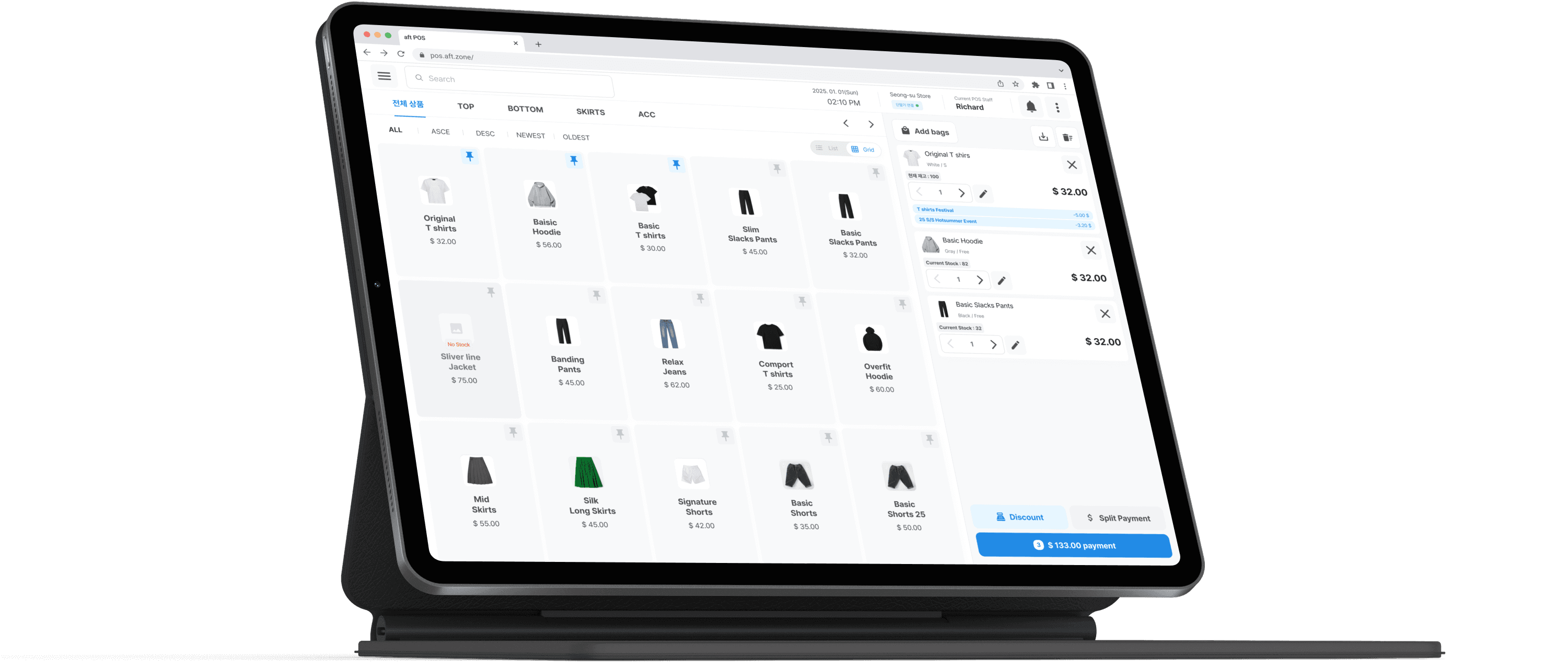
Through the aft 2.0 renewal, the platform evolved from a store-based POS service into a brand-level omnichannel SaaS ecosystem.
The renewal significantly improved operational efficiency, product stability, and user satisfaction, producing measurable gains in customer experience, development productivity, and team collaboration.
By integrating inventory, payment, and store management processes, aft resolved the long-standing fragmentation between online and offline operations. This enabled real-time brand-level control and positioned Aft as a unified platform where all sales channels can be managed in one place.
Impact
& Success Metrics
The Aft 2.0 renewal was more than a system upgrade — it redefined the product’s architecture, user experience, and operational model. By redesigning the system from the ground up, we achieved scalable growth, sustainable maintenance, and delivered true user-driven product innovation.